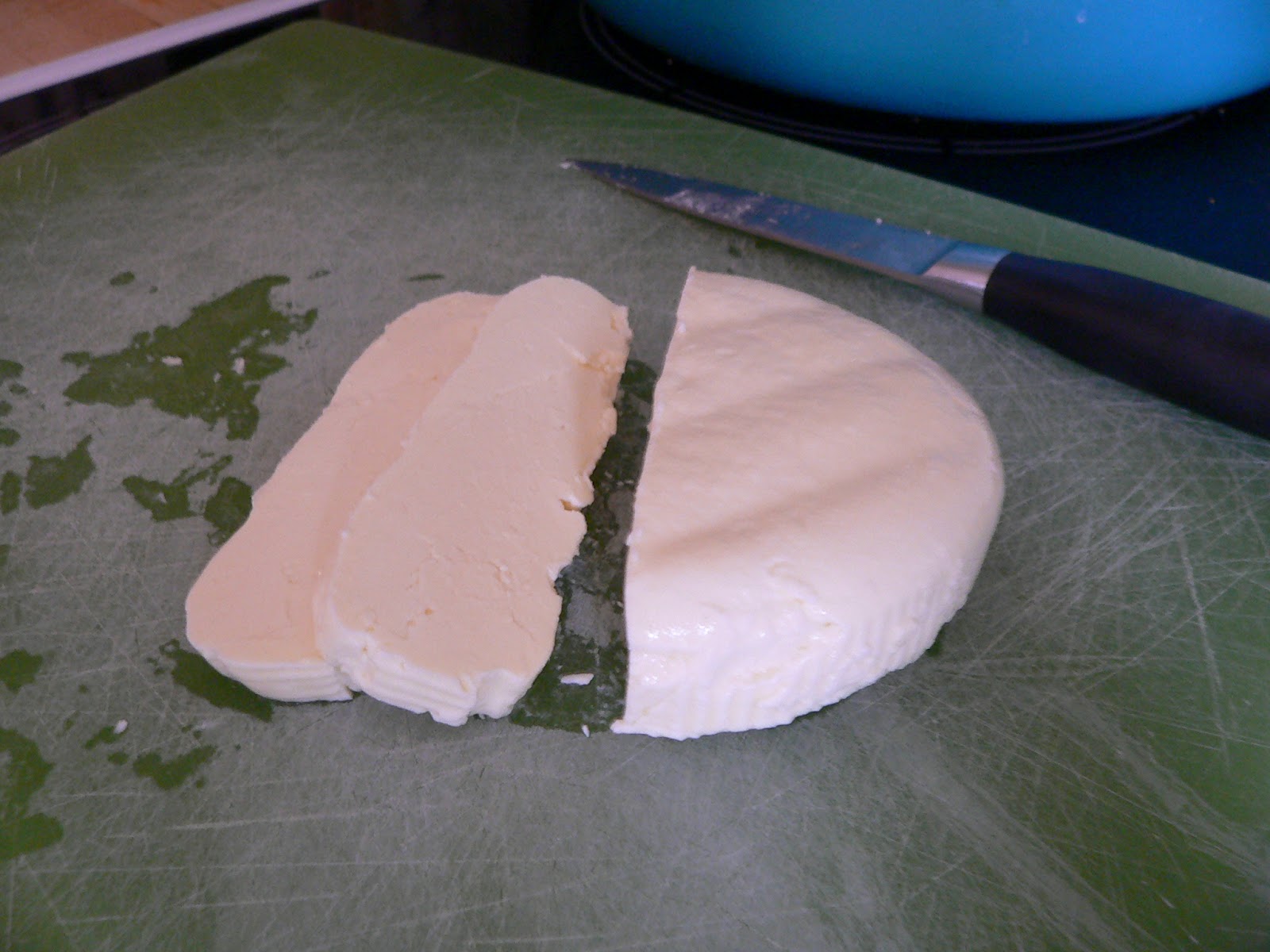
What made the difference this time? - THE MILK!!!! Previously, I'd been working with organic semi-skim milk + some double cream - but the milk I was using was homogenised. This time, I bought pasteurised but unhomogenised milk, Jersey Gold Top. I'll likely order some unpasteurised milk in coming weeks - but the best you can find in supermarkets is pasteurised/unhomogenised... still a major step up from homogenised milk.
So here's what worked for me:
Ingredients (easy enough to double it - I start small when it's a first-try.. or fifth):
1 litre Milk (unhomogenised)
8 drops or 1/8 tspn Rennet (I used generic liquid animal rennet)
Bottled water or boiled/cooled water (non-chlorinated water)
Salt (flake if you have it)
 and Tenacity (in my case)
Supplies (all thoroughly clean):
Saucepan
Dairy thermometer
Strainer
Bowl for under strainer
Cheese cloth or butter muslin
Slowly heat milk to 90F (32C). (Should take around 20 minutes.)
Dilute rennet (combine with 1/4 cup non-chlorinated water) and add to milk.
 With slotted spoon, mix milk and rennet together with an up-and-down motion for 1 minute to make sure it's fully distributed.
Cover and maintain the 90F (32C) for the next 30-45 minutes... I covered saucepan with a towel which helped keep heat in.. and then had to turn the heat on and off throughout to make sure it stayed at this temperature.
Now cut the curds into 2cm pieces... likely the curds are longer than 2cm deep, so you can also run a spoon horizontally through the curds as well.
Let the curds stand for 5 minutes after cutting them.
Now, slowly bring heat up to 104F (40C) - takes about 15 minutes.
 Maintain this temperature and slowly stir the curds.. They should firm up a bit and will turn into their own shapes. Cook for a further 20 minutes at this temperature, continuing to lightly stir.
Time to strain - Place a strainer on top of a bowl to catch the whey. Place a butter muslin or cheese cloth on top of the strainer. With a slotted spoon, scoop up the curds and place them onto the cloth. Reserve the whey in the saucepan as you'll need it in 2 hours. Whey will continue to drain from curds for 15 minutes.

Now place the tops of the cheese cloth over the cheese and place something heavy over the curds... You can place the weight on the curds as they sit in the strainer, or you can move the curds and cloth to a mold if you'd like to be a little fancy. My recipe called for 8 pounds of weight - but I don't have a press, so just put a water-filled tupperware on top of the curds for 2 hours... worked fine!

Peel off the cheese cloth and now you have something resembling cheese!!
Next, slice the cheese into pieces - I cut mine into 4 segments (roughly 2 inches by 2 inches).
Slowly heat the whey to 190F (88C) - should take 20 minutes - basically heat it to just before it wants to boil, but try not to let it boil.

When the whey is 190F (88C), drop the cheese pieces into the whey and cook them, gently stirring from time to time. While maintaining this temperature, cook the cheese for 35-45 minutes. The cheese should eventually float to the top.
 After 35 minutes, remove the cheese from the whey, sprinkle with some flake salt on each side (pat it down so it stays) and air-dry it for 45 minutes, flipping it once.
 Eat straight away or store in a brine. Great raw or grilled.
Make the brine with 50% whey, 50% non-chlorinated water (maybe 300-350ml of each) plus 1 T flake salt.
The halloumi will technically keep for at least a month (if not two)... but more literally, it will be gone in days... num.